


Display | ||
|---|---|---|
| Type
AMOLED vs OLED vs LCD
Different types of diplays used in mobiles Read more → | Dynamic LTPO AMOLED 2X | AMOLED |
| Size | 6.70 inches | 6.32 inches |
| Resolution | 1440 x 3120 pixels | 1216 x 2640 pixels |
| Refresh Rate | 120 Hz | 144 Hz |
| Brightness
Types of Brightness
The different type of mobile display brightness explained Read more → | 2600 nits (peak) | 800 nits (typ), 1800 nits (peak) |
| Features | Corning Gorilla Glass Victus 2, Mohs level 5 | ~90.7% screen-to-body ratio ~460 ppi density 1B colors, 3840Hz PWM, Dolby Vision, HDR Vivid |
| Advantage Samsung Galaxy S26+ offers a larger screen (+0.38"). Advantage Oppo Find X9s Pro offers a smoother 144Hz refresh rate. | ||
Main Camera | ||
|---|---|---|
| Camera | Primary : 50 MP, f/1.8, 24mm (wide), 1/1.56", 1.0µm, dual pixel PDAF, OIS Secondary :12 MP, f/2.2, 13mm, 120˚ (ultrawide), 1/2.55" 1.4µm, Super Steady video Tertiary : 10 MP, f/2.4, 67mm , 1/3.94", 1.0µm, PDAF, OIS, 3x optical zoom | Primary : 200 MP, f/1.6, 23mm (wide), 1/1.4"", 0.56µm, PDAF, OIS Secondary : 50 MP, f/2.0, 15mm, 120˚ (ultrawide), PDAF Tertiary : 200 MP, f/2.6, 65mm (periscope telephoto), 1/1.56"", PDAF, OIS, 2.8x optical zoom |
| Video | 8K 24/30fps, 4K 30/60/120fps, 1080p 30/60/120/240fps, 10-bit HDR, HDR10+, stereo sound rec., gyro-EIS | 8K 30fps (10-bit Log), 4K 30/60/120fps, 1080p 30/60/120/240fps gyro-EIS, OIS, Dolby Vision HDR, 3D LUT |
| Features | Best Face, Horizon Lock, LED flash, auto-HDR, panorama | Laser AF, color spectrum sensor, Hasselblad Color Calibration, Hasselblad Ultra HD, HDR, panorama, Multi-focus LED flash |
Front Camera | ||
|---|---|---|
| Camera | 12 MP, f/2.2, 23mm (wide), 1/3.2", 1.12µm, dual pixel PDAF | 32 MP, f/2.4, 21mm (wide) |
| Video | HDR, HDR10+ | 4K 30/60fps, 1080p 30/60fps, gyro-EIS |
| Features | HDR, HDR10+ | Panorama, HDR |
| Advantage Oppo Find X9s Pro has higher resolution 32 MP selfie camera and supports 4K selfie video. | ||
Design & Build | ||
|---|---|---|
| Dimensions | 158.4 x 75.8 x 7.3 mm | 150.5 x 71.7 x 8.4 mm |
| Thickness | 7.3 mm | 8.4 mm |
| Weight | 190 g | 200 g |
| Color | Cobalt Violet, Sky Blue, Black, White, Silver Shadow, Pink Gold | Blue/Green, Orange, Titanium, White |
| Material | Glass front (Gorilla Glass Victus 2), glass back (Gorilla Glass Victus 2), aluminum frame | — |
| Protection / IP | IP68 | IP68/IP69 |
| Features | — | dust tight and water resistant (high pressure water jets; immersible up to 1.5m for 30 min) |
| Advantage Samsung Galaxy S26+ is 10g lighter in hand and slimmer profile (-1.1 mm). | ||
Connectivity | ||
|---|---|---|
| Network | 2G, 3G, 4G, 5G | 2G, 3G, 4G,5G |
| SIM | SIM1: nano+eSim SIM2: nano+eSim | SIM : Nano-SIM, Nano-SIM |
| Positioning | — | GPS (L1+L5), GALILEO (E1+E5a+E5b), QZSS (L1+L5), BDS (B1l+B1C+ B2a+B2b), GLONASS, NavIC (L5) |
| NFC | Yes | Yes |
| Wi-Fi | Wi-Fi (802.11 a/b/g/n/ac) | Wi-Fi 802.11 a/b/g/n/ac/6/7, dual-band, Wi-Fi Direct |
| Bluetooth | 6 | 6.1 |
| Advantage Samsung Galaxy S26+ offers convenient eSIM support. Advantage Oppo Find X9s Pro offers faster next-gen Wi-Fi 7 connectivity and more accurate dual-frequency GPS (L1+L5). | ||
Performance | ||
|---|---|---|
| OS / UI | One UI 8.5 | ColorOS 16 |
| Chipset | Qualcomm SM8850-1-AD Snapdragon 8 Elite Gen 5 (3 nm) – US/CN Exynos 2600 (2 nm) – ROW | Mediatek Dimensity 9500 (3 nm) |
| CPU | Octa-core (2x4.74 GHz Oryon V3 Phoenix L + 6x3.62 GHz Oryon V3 Phoenix M) – US/CN 10-core (1x3.80GHz C1-Ultra & 3x3.25GHz C1-Pro & 6x2.75GHz C1-Pro) – ROW | Octa-core (1x4.21 GHz C1-Ultra & 3x3.5 GHz C1-Premium & 4x2.7 GHz C1-Pro) |
| GPU | Adreno 840 (1.3GHz) - US/CN Xclipse 960 – ROW | Immortalis-G925 |
| RAM | 12 GB | 12,16 GB |
| Storage | 256,512 GB | 256,512 ,1 GB |
| Card Slot | — | No |
| USB | USB Type-C 3.2, DisplayPort 1.2, OTG | USB Type-C, OTG |
| Speaker | Yes, with stereo speakers | Yes, with stereo speakers |
| 3.5mm Jack | no | No |
| Sensors | Fingerprint (under display, ultrasonic), accelerometer, gyro, proximity, compass, barometer | Fingerprint (under display, ultrasonic) accelerometer, gyro, proximity, compass |
Battery | ||
|---|---|---|
| Capacity | 4900 mAh | 7025 mAh |
| Charging | 45W wired, PD3.0, 69% in 30 min 20W wireless (Qi2.2) 4.5W reverse wireless | 80W wired, 44W/80W UFCS, 55W PPS, 13.5W PD |
| Advantage Samsung Galaxy S26+ supports wireless charging. Advantage Oppo Find X9s Pro has a 43% larger battery (+2125 mAh) and faster 80W wired charging. | ||
Disclaimer :
Though we have tried our best to avoid any error but still we cannot guarantee that the information on this page is 100% accurate, as it's a human tendency to make errors and at the end of the day we too are humans.
Samsung Galaxy S26 Ultra
vs Xiaomi 17 Ultra
Compare Specs →
Oppo Find X9 Ultra
vs Samsung Galaxy Z TriFold
Compare Specs →
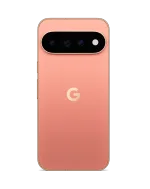

Google Pixel 11 Pro XL
vs Google Pixel 11 Pro
Compare Specs →
Apple iPhone 17 Pro Max
vs Apple iPhone 17 Pro
Compare Specs →
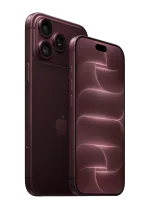
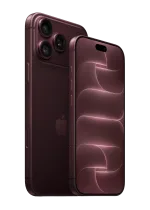
Apple iPhone 18 Pro Max
vs Apple iPhone 18 Pro
Compare Specs →
Samsung Galaxy S26 Ultra
5000 mAh
Qualcomm SM8850-1-AD Snapdragon 8 Elite Gen 5 (3 nm)
Xiaomi 17 Ultra
6000 mAh
Qualcomm SM8850-AC Snapdragon 8 Elite Gen 5 (3 nm)
Oppo Find X9 Ultra
7050 mAh
Qualcomm SM8850-AC Snapdragon 8 Elite Gen 5 (3 nm)
Samsung Galaxy Z TriFold
5600 mAh
Qualcomm SM8750-AC Snapdragon 8 Elite (3 nm)
Google Pixel 11 Pro XL
5115 mAh
Google Tensor G6 (3 nm)