


Display | ||
|---|---|---|
| Type
AMOLED vs OLED vs LCD
Different types of diplays used in mobiles Read more → | Tri-foldable Dynamic LTPO AMOLED 2X | LTPO Super Retina XDR OLED |
| Size | 10.00 inches | 6.90 inches |
| Resolution | 1584 x 2160 pixels | 1320 x 2868 pixels |
| Refresh Rate | 120 Hz | 120 Hz |
| Brightness
Types of Brightness
The different type of mobile display brightness explained Read more → | 1600 nits (peak) | Typ - 1000 nits, HBM - 1600 nits Peak - 3000 nits |
| Features | ~89.6% screen-to-body ratio) | ~90.7% screen-to-body ratio ~460 ppi density Ceramic Shield 2 |
| Advantage Samsung Galaxy Z TriFold offers a larger screen (+3.1"). | ||
Main Camera | ||
|---|---|---|
| Camera | Primary :200 MP, f/1.7, 24mm (wide), 1/1.3", 0.6µm, multi-directional PDAF, OIS Secondary :12 MP, f/2.2, 13mm, 120˚ (ultrawide), 1/2.55", 1.4µm, dual pixel PDAF Tertiary : 10 MP, f/2.4, 67mm (telephoto), 1/3.94", 1.0µm, PDAF, OIS, 3x optical zoom | Primary : 48 MP, f/1.5-4.0, 24mm (wide), 1/1.28"", 1.22µm, dual pixel PDAF, sensor-shift OIS (gen2) Secondary : 48 MP, f/2.2, 13mm, 120˚ (ultrawide), 1/2.55"", 0.7µm, PDAF Tertiary : 48 MP, f/2.8, 100mm, 1/2.55"", 0.7µm, PDAF, 3D sensor‑shift OIS, 4x optical zoom |
| Video | 8K 30fps, 4K 60fps, 1080p 60/120/240fps (gyro-EIS), 10-bit HDR, HDR10+ | 4K 24/25/30/60/100/120fps, 1080p 25/30/60/120/240fps 10-bit HDR, Dolby Vision HDR (up to 120fps), ProRes, ProRes RAW (up to 120fps) |
| Features | — | Dual-LED dual-tone flash, HDR (photo/panorama), Cinematic from regular video TOF 3D LiDAR scanner (depth) Apple Log 2, 3D (spatial) video/audio, stereo sound rec. |
| Advantage Samsung Galaxy Z TriFold features high-resolution 8K video recording. | ||
Front Camera | ||
|---|---|---|
| Camera | 10 MP, f/2.2, 18mm (ultrawide), 1/3.0", 1.12µm | 18 MP multi-aspect, f/1.9, 20mm (ultrawide), PDAF |
| Video | 4K 30/60fps, 1080p 30/60fps, gyro-EIS | 4K 24/25/30/60fps, 1080p 25/30/60/120fps, gyro-EIS |
| Features | Cover camera: 10 MP, f/2.2, 24mm (wide), 1/3.0", 1.12µm | HDR, Dolby Vision HDR, 3D (spatial) audio, stereo sound rec., ProRes RAW, Apple Log 2 |
Design & Build | ||
|---|---|---|
| Dimensions | Unfolded: 159.2 x 214.1 x 3.9-4.2 , Folded: 159.2 x 75 x 12.9 mm | 163.4 x 78 x 8.8 mm |
| Thickness | 0.0 mm | 8.8 mm |
| Weight | 309 g | 249 g |
| Color | Crafted Black | Black, Silver, Glacier, Burgundy |
| Material | Glass front (Gorilla Glass Victus Ceramic 2) (folded), plastic front (unfolded), ceramic-glass fiber-reinforced polymer back, aluminum frame, titanium hinge housing | Glass front (Ceramic Shield 2), aluminum frame, aluminum back/ glass back (Ceramic Shield) |
| Protection / IP | IP48 | IP68 |
| Features | — | dust tight and water resistant (immersible up to 6m for 30 min) |
| Advantage Samsung Galaxy Z TriFold is slimmer profile (-8.8 mm). Advantage Apple iPhone 18 Pro Max is 60g lighter in hand. | ||
Connectivity | ||
|---|---|---|
| Network | 2G, 3G, 4G, 5G | 2G, 3G, 4G, 5G |
| SIM | SIM1: nano+eSim SIM2: nano+eSim | SIM1: nano or eSIM SIM2: eSIM |
| Positioning | — | GPS (L1+L5), GLONASS, GALILEO, BDS, QZSS, NavIC |
| NFC | Yes | Yes |
| Wi-Fi | Wi-Fi (802.11 a/b/g/n/ac) | Wi-Fi 802.11 a/b/g/n/ac/6e/7, tri-band |
| Bluetooth | 5.4 | 6 |
| Radio | — | No |
| Advantage Apple iPhone 18 Pro Max offers faster next-gen Wi-Fi 7 connectivity, newer Bluetooth 6, and more accurate dual-frequency GPS (L1+L5). | ||
Performance | ||
|---|---|---|
| OS / UI | One UI 8.5 | iOS 27 |
| Chipset | Qualcomm SM8750-AC Snapdragon 8 Elite (3 nm) | Apple A20 Pro (2 nm) |
| CPU | Octa-core (2x4.47 GHz Oryon V2 Phoenix L + 6x3.53 GHz Oryon V2 Phoenix M) | Hexa-core (2x GHz high performance + 4x GHz) |
| GPU | Adreno 830 (1200 MHz) | Apple GPU (7-core graphics) |
| RAM | 16 GB | 12 GB |
| Storage | 512,1 GB | 1TB, 2TB, 256,512 GB |
| Card Slot | no | No |
| USB | USB Type-C 3.2 | USB Type-C 3.2 Gen 2, DisplayPort |
| Speaker | Yes, with stereo speakers | Yes, with stereo speakers |
| 3.5mm Jack | no | No |
| Sensors | Fingerprint (side-mounted), accelerometer, gyro, proximity, compass, barometer,Samsung DeX wireless (desktop experience support) | Face ID, accelerometer, gyro, proximity, compass, barometer Ultra Wideband (UWB) support (gen2 chip) Emergency SOS, Messages and Find My via satellite |
| Advantage Samsung Galaxy Z TriFold offers more memory with up to 16 GB RAM. Advantage Apple iPhone 18 Pro Max offers higher storage capacity (up to 2 TB). | ||
Battery | ||
|---|---|---|
| Capacity | 5600 mAh | 5391 mAh |
| Charging | 45W wired, QC2.0, 50% in 30 min 15W wireless (Qi2.2) 4.5W reverse wireless | Wired, PD3.2, AVS, 50% in 15 min 4.5W reverse wired |
| Advantage Samsung Galaxy Z TriFold has a 4% larger battery (+209 mAh), supports wireless charging, and faster 45W wired charging. | ||
Disclaimer :
Though we have tried our best to avoid any error but still we cannot guarantee that the information on this page is 100% accurate, as it's a human tendency to make errors and at the end of the day we too are humans.
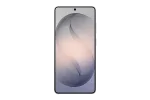
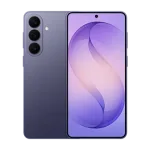
Samsung Galaxy S26 Ultra
vs Samsung Galaxy S26+
Compare Specs →
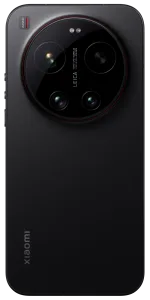
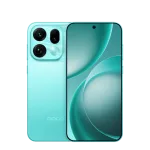
Xiaomi 17 Ultra
vs Oppo Find X9s Pro
Compare Specs →
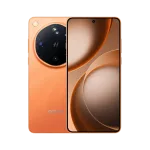
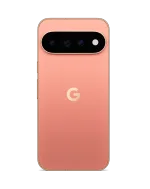
Oppo Find X9 Ultra
vs Google Pixel 11 Pro XL
Compare Specs →
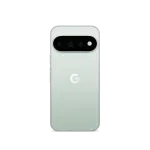
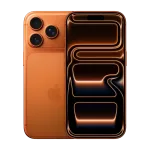
Google Pixel 11 Pro
vs Apple iPhone 17 Pro Max
Compare Specs →
Apple iPhone 17 Pro
vs Apple iPhone 18 Pro
Compare Specs →
Samsung Galaxy S26 Ultra
5000 mAh
Qualcomm SM8850-1-AD Snapdragon 8 Elite Gen 5 (3 nm)
Samsung Galaxy S26+
4900 mAh
Qualcomm SM8850-1-AD Snapdragon 8 Elite Gen 5 (3 nm) – US/CN | Exynos 2600 (2 nm) – ROW
Xiaomi 17 Ultra
6000 mAh
Qualcomm SM8850-AC Snapdragon 8 Elite Gen 5 (3 nm)
Oppo Find X9s Pro
7025 mAh
Mediatek Dimensity 9500 (3 nm)
Oppo Find X9 Ultra
7050 mAh
Qualcomm SM8850-AC Snapdragon 8 Elite Gen 5 (3 nm)